Women In Ballet
2023
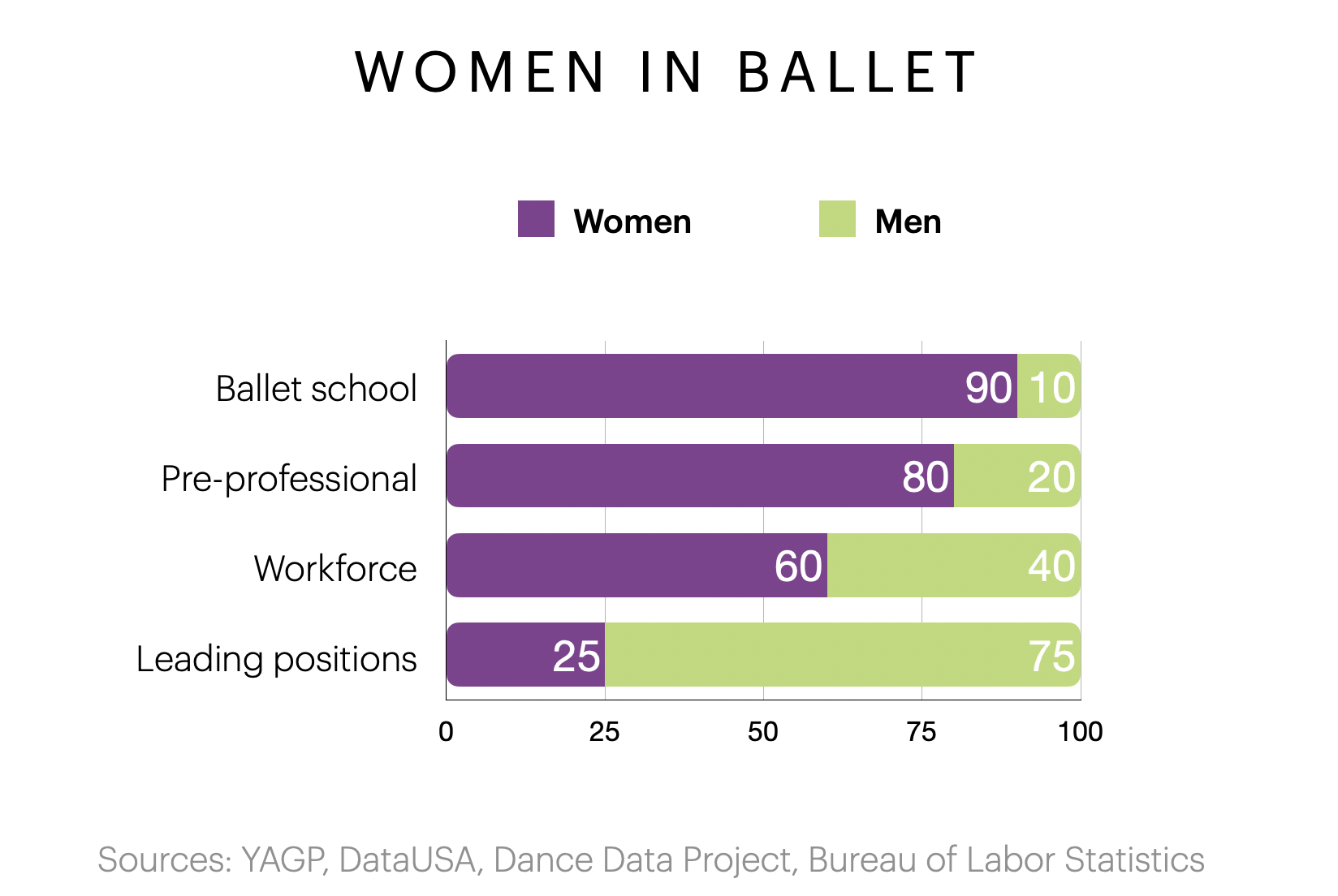
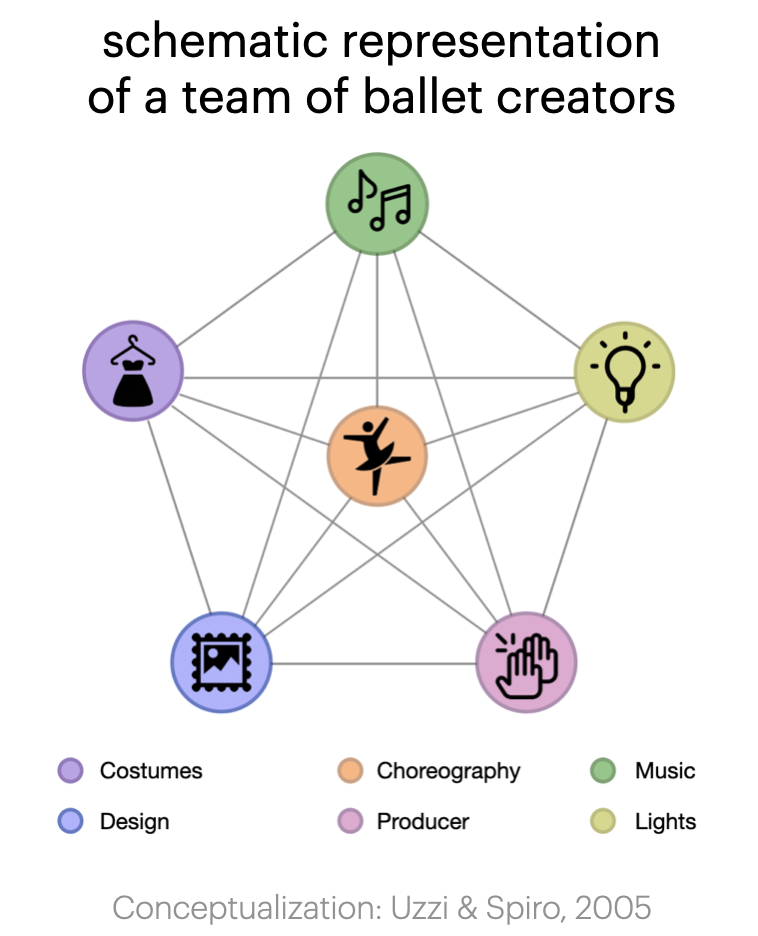
Despite ballet’s strong association with women on stage, creative leadership behind the scenes remains largely male-dominated. This project visualizes collaborative relationships among choreographers, composers, designers, and other credited creators at the New York City Ballet, using the public performance data from the company’s extensive repertory.
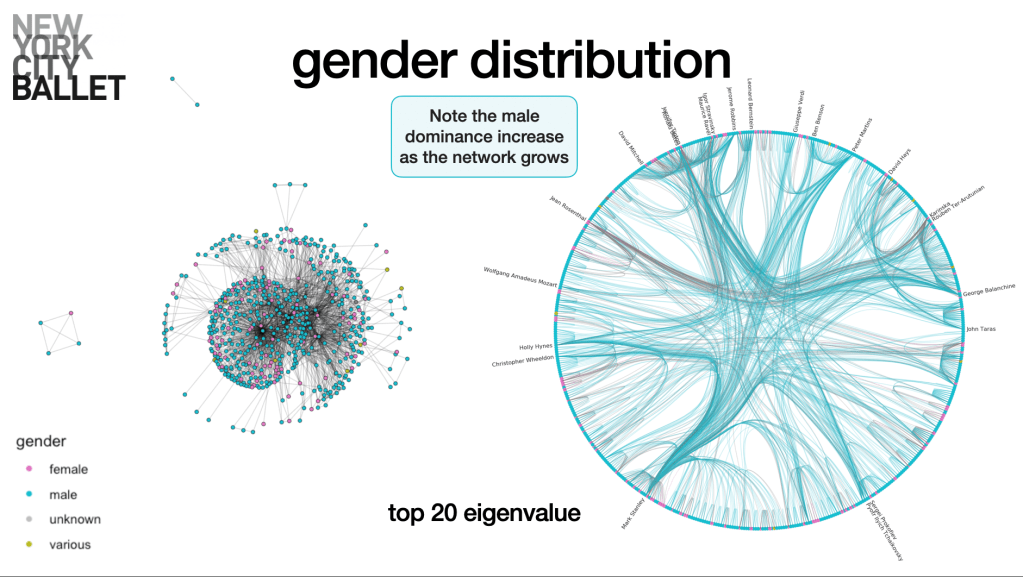
In the ballet collaboration network, each artist is represented as a node, and two nodes are connected if they are listed as collaborators of the same ballet work. The gender of the artists is inferred from names using the gender package in R.
Below on the left, there is a representation of the network, with nodes colored by gender (man: blue, women: pink). A second visualization on the right applies Hierarchical Edge Bundling to emphasize adjacency relations between artists organized in a hierarchy emerged from recurring collaborations. Dyadic collaborations are color-coded as blue:male-male, pink:female-female, and gray:mixed, and node labels are selected based on node’s eigenvector centrality, a measure of influence in the network. This visualization highlights how male-dominated the collaborative environment is in ballet creations at the NYCB.
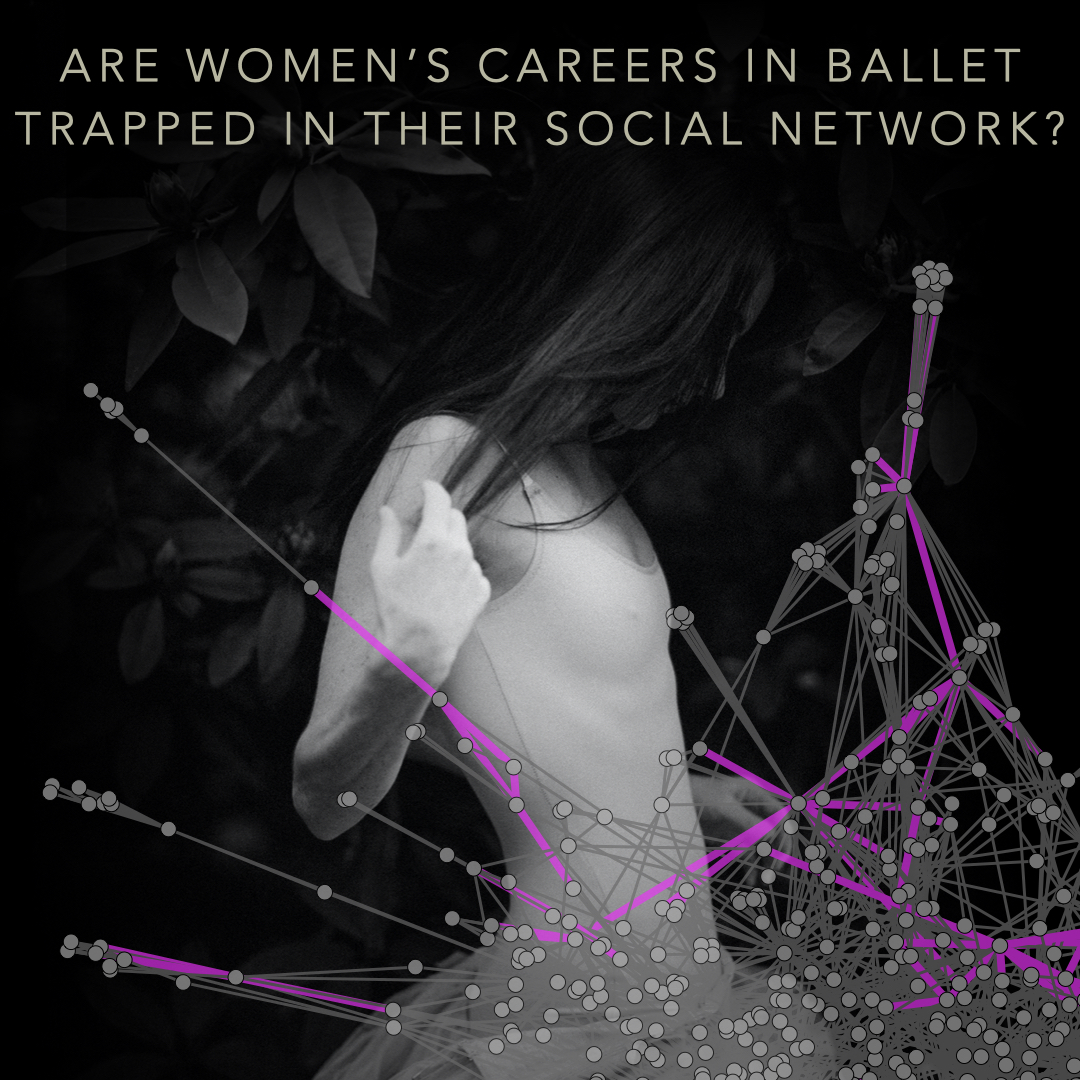
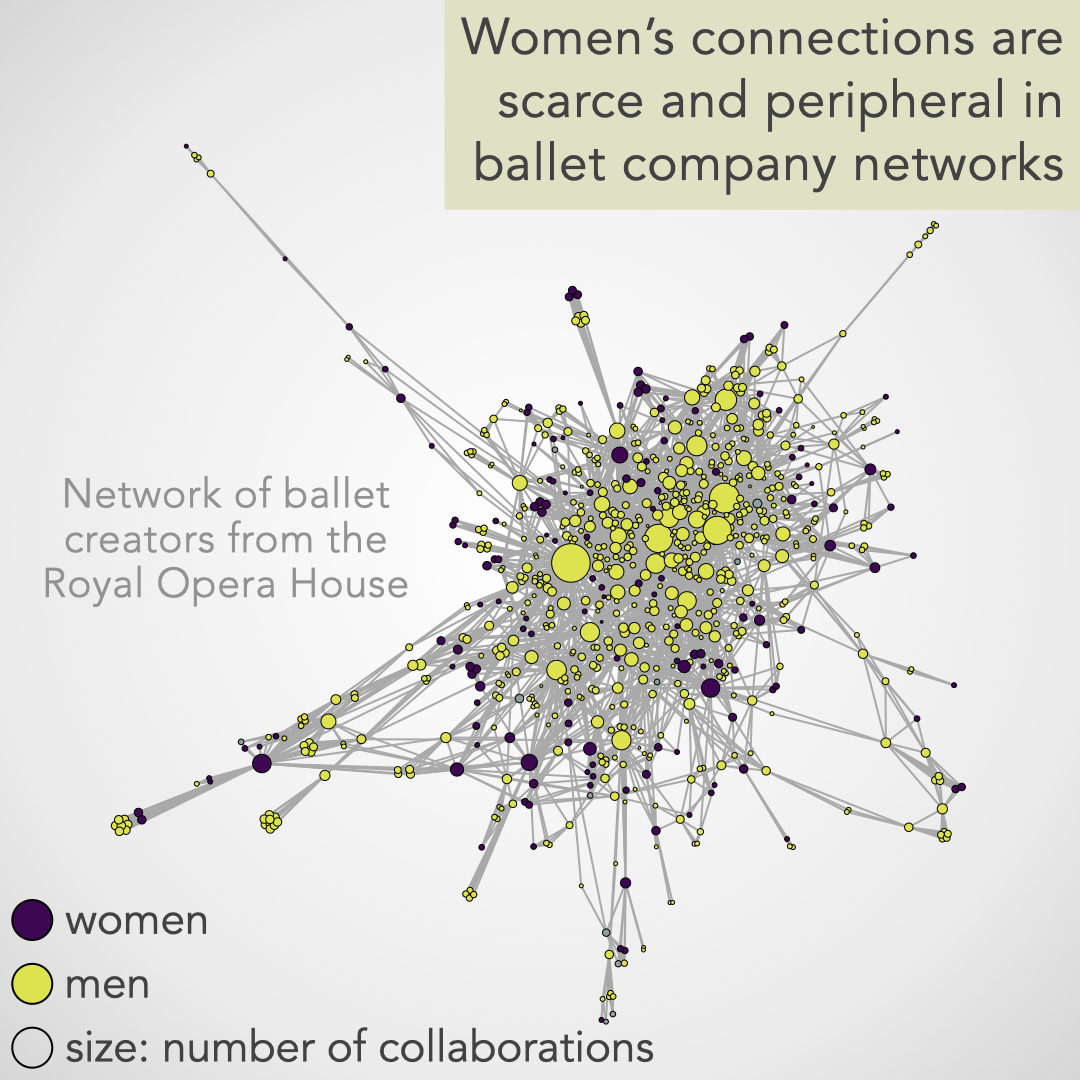
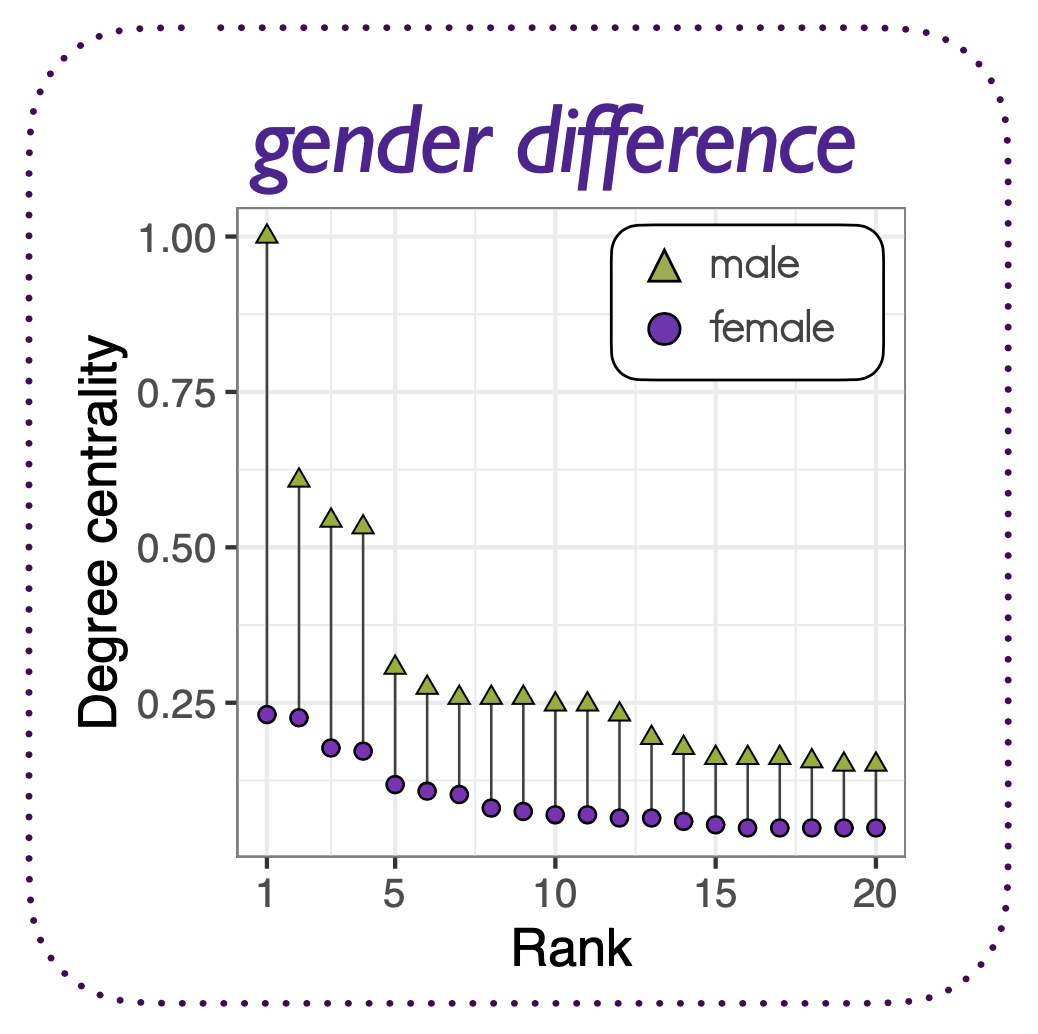
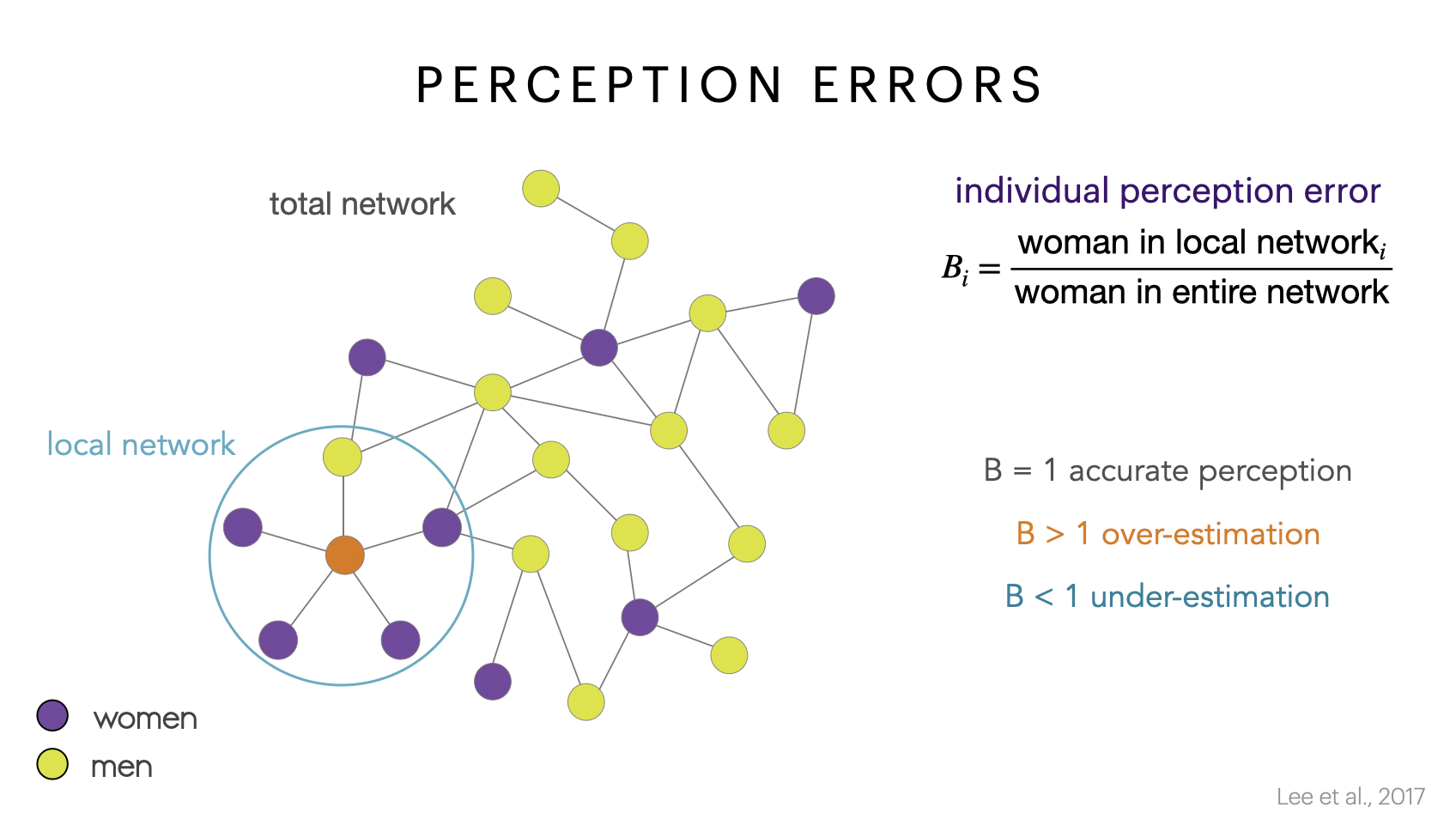
This data visualization project uses network science to illustrate the gendered collaborative patterns influencing women’s network position as creative leaders in ballet, often located at the periphery of the network rather than at the center of influence, where men are more frequently found.
The original research article is “Structural Gender Imbalances in Ballet Collaboration Networks” (2023), published in EPJ Data Science.
Source: https://www.nycballet.com/discover/ballet-repertory/
Data accessed: October 11, 2020
 Yessica Herrera